
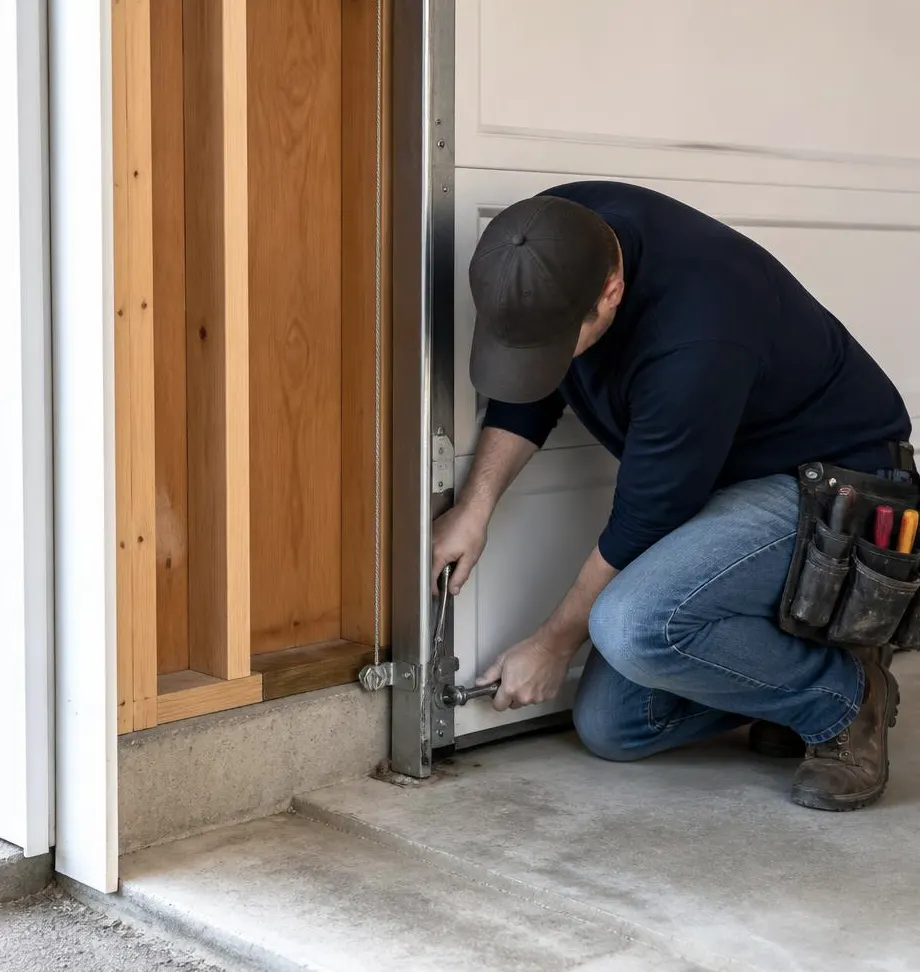
Quiet That Garage Door Opener Before Michigan Winter Hits
Rule of thumb: most noisy garage door openers can be quieted with basic tightening and the right lubricant, so start there before you assume the worst.
The exceptions matter, though. If the noise is a sudden loud bang, a metal-on-metal grinding sound, or a noise that's gotten dramatically worse in the last week or two, that's usually not a lubrication problem. It's more often a sign of a failing spring, a cracked roller, or cable damage, and those jobs involve parts under heavy tension that can cause real injury if handled wrong.
Tools You'll Need
- Socket wrench set or adjustable wrench
- Silicone-based garage door lubricant (not WD-40, not grease, not household oil)
- Clean rags
- Flashlight
- Sturdy stepladder
- Work gloves
Step-by-Step: Finding and Fixing the Noise
- Listen before you touch anything. Run the door up and down and pay attention to where the noise happens. A squeak near the top usually means dry hinges or rollers. A rhythmic clack along the track points to a worn roller. A loud bang is almost always spring or hardware related and should stop you from going further on your own.
- Check and tighten every bolt you can reach. Garage doors flex every time they move, and that constant motion works screws and bolts loose over months of use. Walk the full length of the track and the mounting brackets with a wrench and snug up anything that's loose. Don't overtighten; just bring everything back to firm.
- Lubricate the moving metal parts. Hinges, the spring itself (lightly), and the track rollers all benefit from a silicone-based lubricant made for garage doors. Skip the nylon rollers if your door has them; they don't need oil and grease just attracts grit. This is also a good time to wipe down tracks that have picked up salt residue or winter grime from the past season, since buildup there adds friction and noise.
- Inspect the rollers. Look for cracks, flat spots, or rollers that wobble instead of spinning cleanly. Worn rollers are a common noise source on doors that have been through several Michigan winters, since cold, salt, and road grime accelerate wear on the metal stems and bearings. Replacing a roller is a reasonable DIY task if you're comfortable with a socket wrench, as long as the door is fully down and the opener is unplugged.
- Check chain tension or belt condition. A chain-drive opener that's too loose will slap against the rail with every cycle. Most openers have a simple tensioning nut for this, and the owner's manual will show the correct sag measurement. If you have a belt-drive system, look for fraying or cracking in the belt itself; a worn belt should be replaced rather than tightened.
- Add a vibration-dampening kit at the motor mount. A rubber isolator between the opener's mounting bracket and the ceiling joist cuts down the vibration that travels into the house, which matters a lot if the garage shares a wall with a bedroom or living space.
What You Can Do Yourself, and What to Hand Off
Tightening hardware, lubricating rollers and hinges, swapping a worn roller, and adjusting chain tension are all reasonable homeowner jobs with basic tools. What you shouldn't take on yourself: anything involving the torsion spring, cable replacement, or opener gear assembly work. Springs store enormous tension and have caused serious injuries even to people who thought they knew what they were doing. If tightening and lubricating don't fix the noise, or if you hear grinding from inside the opener housing itself, that's your signal to stop and call a technician rather than keep troubleshooting.
Considering a Belt-Drive Swap
If your current opener is a chain-drive unit and the noise keeps coming back no matter how well you maintain it, a belt-drive opener is a real long-term fix rather than a patch. Belt-drive systems run noticeably quieter because there's no metal chain slapping against a rail, and they hold up well through temperature swings between a humid Michigan summer and a deep-cold winter. The trade-off is upfront cost, with belt-drive openers typically running higher than comparable chain-drive units, but for anyone whose garage sits under a bedroom or close to living space, the quiet is often worth it.
When to Call Bailey Garage Door Pro
If you've tightened, lubricated, and inspected the obvious parts and the door still bangs, grinds, or shakes the house every time it runs, it's time to call us. We'll diagnose whether the issue is the opener itself, worn rollers and hardware, or a spring that's reaching the end of its life, and we can handle a full Garage Door Opener Service or a belt-drive installation if that's the better long-term fix. We also check spring tension and cable condition as part of that visit, since those are the parts no homeowner should be adjusting solo.
If you're dealing with a noisy, slamming, or unreliable garage door anywhere in Bailey, Sand Lake, Cedar Springs, Newaygo, Grant, Fremont, Big Rapids, or Howard City, give Bailey Garage Door Pro a call before winter makes the problem worse. We show up on time and get it fixed right the first time.